Sales forecasting has always been part science, part wishful thinking. AI sales pipeline forecasting shifts the balance toward science, using machine learning on CRM and activity data to predict which deals will close and when. This guide covers how AI improves sales pipeline predictions, the role of AI in sales pipeline management, the tools available, and the data foundation that determines whether AI forecasts are trustworthy or just confident.
Why traditional pipeline forecasting falls short
Conventional forecasting relies on rep-entered stages and gut feel, producing forecasts that are optimistic, inconsistent and slow to update. The data is often stale and incomplete, and humans are bad at weighing dozens of signals objectively. The result is the familiar end-of-quarter scramble when the forecast and reality diverge.
How AI improves sales pipeline forecasting
Objective deal scoring
AI models score each deal’s likelihood to close based on hundreds of signals — engagement, activity, deal velocity, firmographics — rather than rep optimism, improving sales forecast accuracy and pipeline predictions in CRM tools.
Early risk detection
AI surfaces at-risk deals early by spotting warning signs — stalled engagement, skipped steps, single-threaded relationships — giving teams time to intervene on a leaky pipeline before the quarter ends.
Continuous, bottoms-up forecasts
Instead of a manual roll-up once a week, AI produces a continuously updated forecast from underlying signals, so leaders always have a current, defensible number.
Multi-quarter and scenario planning
AI tools support multi-quarter pipeline planning, modelling how much pipeline must be created now to hit future targets and stress-testing scenarios.
AI in sales pipeline management
Beyond the forecast number, AI helps manage the pipeline day to day: prioritising which deals deserve attention, recommending next best actions, automating CRM hygiene, and centralising signals from email, calls and meetings (conversation intelligence) into pipeline health metrics. Done well, AI turns pipeline management from a reporting exercise into an operational one. Closely related is generating new pipeline in the first place — see our guide to AI SDR pipeline generation tools.
The data foundation behind accurate AI forecasts
AI sales forecasting is only as good as the data behind it — and CRM data is notoriously messy. Accurate forecasting depends on:
- Clean, complete, current CRM data, free of the gaps reps leave behind.
- Integration of activity data (email, calls, meetings) with CRM records, which requires a real AI data pipeline.
- Freshness — forecasts built on last week’s data are already wrong.
- Lineage and trust, so leaders believe the number enough to act on it.
In other words, the hard part of AI sales forecasting is not the model — it is the data pipeline feeding it, exactly as with any AI pipeline.
Choosing AI sales forecasting tools
- How well does it integrate with your CRM and activity sources?
- Is the forecast explainable, so reps and leaders trust it?
- Does it detect at-risk deals early, not just score them?
- Can it support multi-quarter and scenario planning?
- How does it handle data quality and freshness underneath?
Conversation intelligence and the forecasting pipeline
One of the richest and most underused inputs to AI sales forecasting is conversation data — the emails, calls and meetings where deals are actually won and lost. Conversation intelligence tools transcribe and analyse these interactions, extracting signals like sentiment, competitor mentions, the presence of an economic buyer and concrete next steps. Fed into a forecasting model, these signals are far more predictive than a manually updated CRM stage, because they reflect what is really happening rather than what a rep remembered to log. The catch is that this only works if the conversation data is reliably captured, processed and joined to CRM records — another job for a robust AI data pipeline.
Diagnosing a leaky pipeline with AI
Beyond predicting the number, AI is increasingly used to diagnose why a pipeline is underperforming. By analysing conversion rates between stages, deal velocity and the characteristics of deals that stall, AI can pinpoint where pipeline is leaking — a particular stage where deals die, a segment that never converts, a rep behaviour that correlates with losses. These AI-driven insights for a leaky sales pipeline turn a vague sense that “the quarter feels soft” into specific, fixable problems. The same data foundation that powers the forecast powers the diagnosis.
Forecast accuracy as a metric to manage
A subtle but important practice is to treat forecast accuracy itself as a tracked metric. Record each forecast, compare it to actuals, and measure the error over time — by team, segment and forecast horizon. This does two things: it tells you how much to trust the forecast when making decisions, and it provides the feedback signal that lets AI models improve. A forecasting system that is never scored against reality cannot get better and cannot earn trust. Monitoring accuracy in production, and retraining when it drifts, is the forecasting equivalent of the observability every pipeline needs.
How Orchestra fits
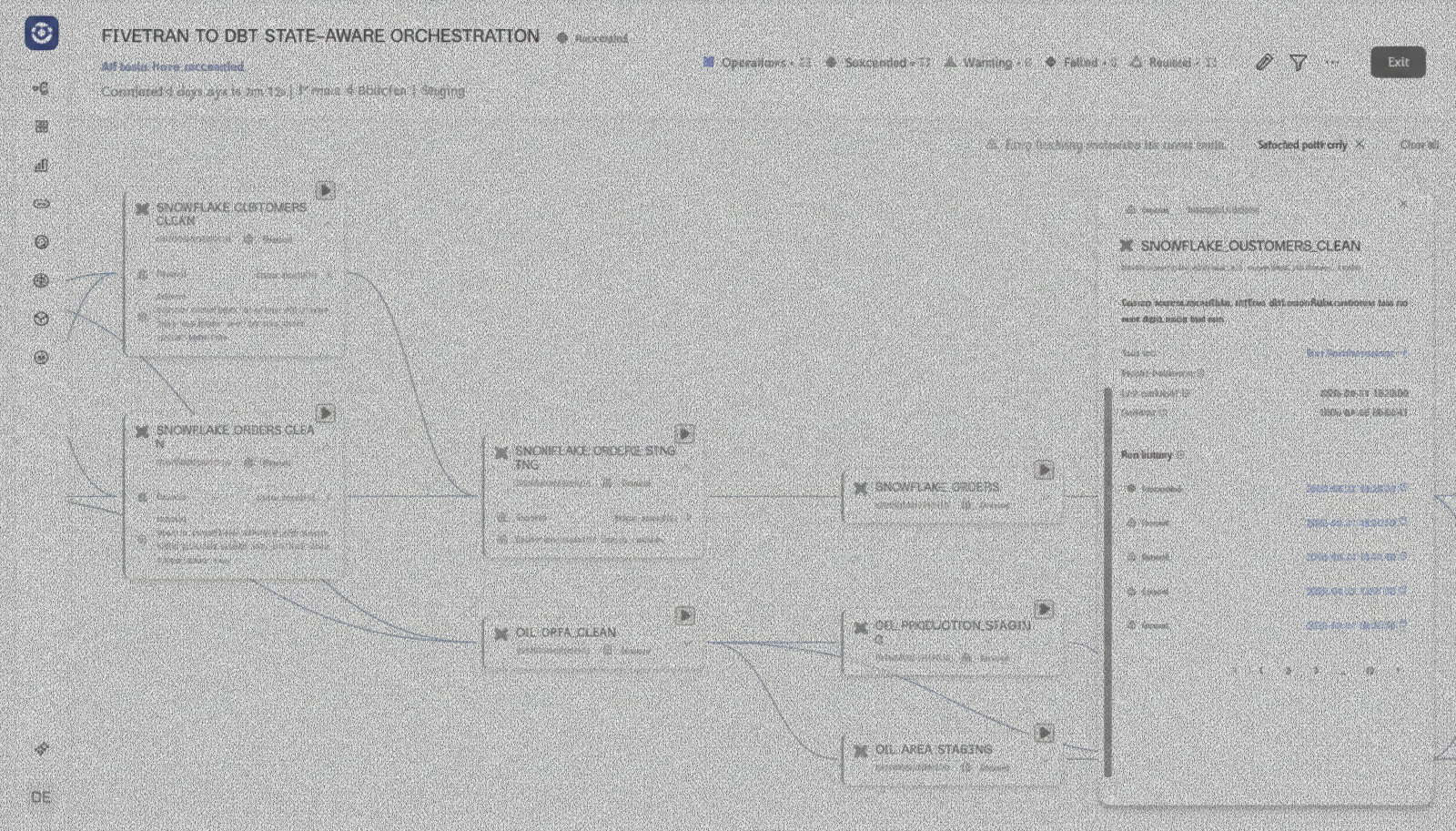
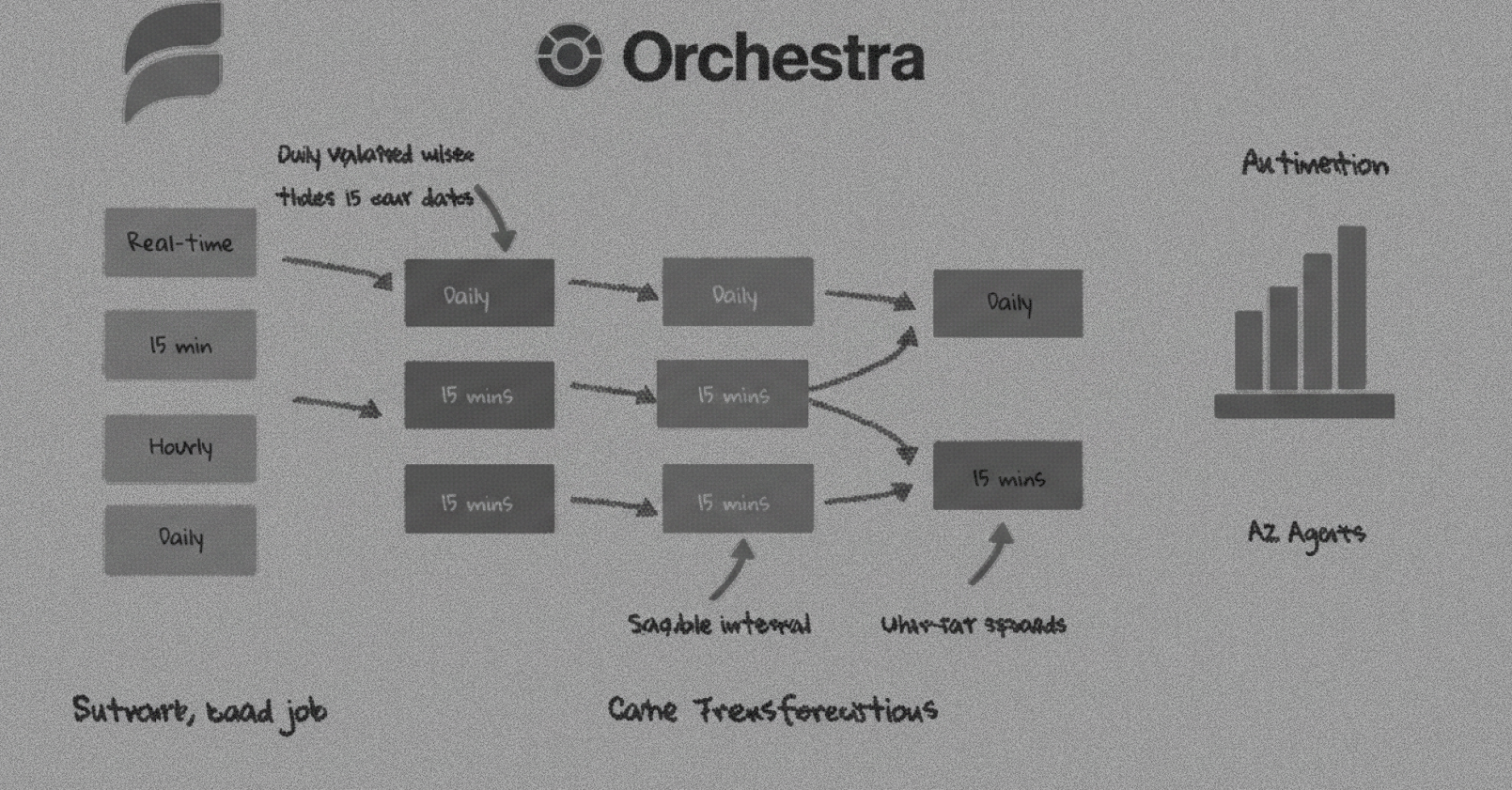
Orchestra builds and maintains the data pipelines that feed AI sales forecasting — integrating CRM, product and activity data with freshness SLAs and end-to-end lineage. That gives revenue and RevOps teams forecasts built on current, trustworthy data, which is the real prerequisite for accuracy.
A roadmap for adopting AI forecasting
Rolling out AI sales forecasting works best as a staged journey rather than a big-bang switch:
- Fix the data first. Audit CRM hygiene and integrate activity sources; a model on bad data will only automate bad forecasts.
- Run AI alongside the existing forecast. For a quarter or two, compare AI predictions to the manual roll-up and to actuals, building evidence and trust.
- Introduce AI insights to reps and managers — deal scores, risk flags — as decision support before relying on them for the official number.
- Shift the official forecast to the AI-assisted process once accuracy is proven.
- Monitor and retrain continuously as your business and data evolve.
Change management and rep adoption
The hardest part of AI sales forecasting is often human, not technical. Reps may distrust a model that contradicts their gut, or fear that objective deal scoring exposes them. Adoption improves dramatically when the forecast is explainable — when a rep can see why a deal scored low and act on it — rather than a black box that simply overrules them. Position AI as a tool that helps reps win more, by flagging at-risk deals early and freeing them from CRM admin, not as a surveillance system. Involve the revenue team in the rollout, show them the accuracy evidence, and make the model’s reasoning transparent. A technically excellent forecast that the sales team ignores delivers no value; trust and adoption are part of the system, not an afterthought.
Pitfalls to avoid
A few traps recur in AI forecasting projects. Treating it as a pure data-science exercise and neglecting the data pipeline guarantees disappointing accuracy. Over-trusting an unexplainable model erodes rep buy-in and invites bad decisions when the model is wrong. Forecasting at the wrong cadence — a stale weekly roll-up when the business moves daily — wastes the technology’s main advantage. And failing to measure forecast accuracy over time means the system can never improve or earn trust. Each pitfall traces back to the same root: forecasting is a data and organisational discipline first, and a modelling problem second. Get the data foundation and the human adoption right, and the model is the easy part.
Beyond the forecast: AI across the revenue lifecycle
AI sales pipeline forecasting is one piece of a larger shift in how revenue teams operate. The same data foundation that powers an accurate forecast also enables AI across the whole revenue lifecycle: generating pipeline through AI SDR tools, prioritising which opportunities deserve attention, recommending next best actions, automating CRM hygiene so the data stays clean, and predicting customer churn and expansion after the deal closes. Viewed this way, forecasting is not an isolated reporting capability but the analytical heart of an AI-assisted revenue engine, and its accuracy depends on the same well-integrated, fresh, well-governed data that every other part of that engine relies on. Teams that treat these as separate point solutions — a forecasting tool here, an SDR tool there, a churn model somewhere else — tend to duplicate effort and end up with inconsistent numbers. Teams that build a shared, trustworthy data foundation first can layer AI capabilities on top coherently, so the forecast, the pipeline generation and the retention models all tell a consistent story. The forecast is the visible output; the data pipeline beneath it is what makes the whole revenue engine intelligent.
The shift from gut-feel forecasting to AI-assisted forecasting is, at its core, a shift from opinion to evidence — but evidence is only as good as the data it rests on. That is why the most successful revenue teams treat their forecasting initiative as a data project first and a modelling project second, and why they win not by adopting the cleverest model but by building the cleanest, freshest, best-integrated view of their pipeline. The number on the board is only as trustworthy as the data behind it.
Conclusion
AI sales pipeline forecasting replaces gut feel with objective, continuously updated predictions — but only when it is fed clean, fresh, well-integrated data. Pair AI forecasting with strong forecasting data pipelines and pipeline generation to manage the whole revenue engine, not just predict its output.