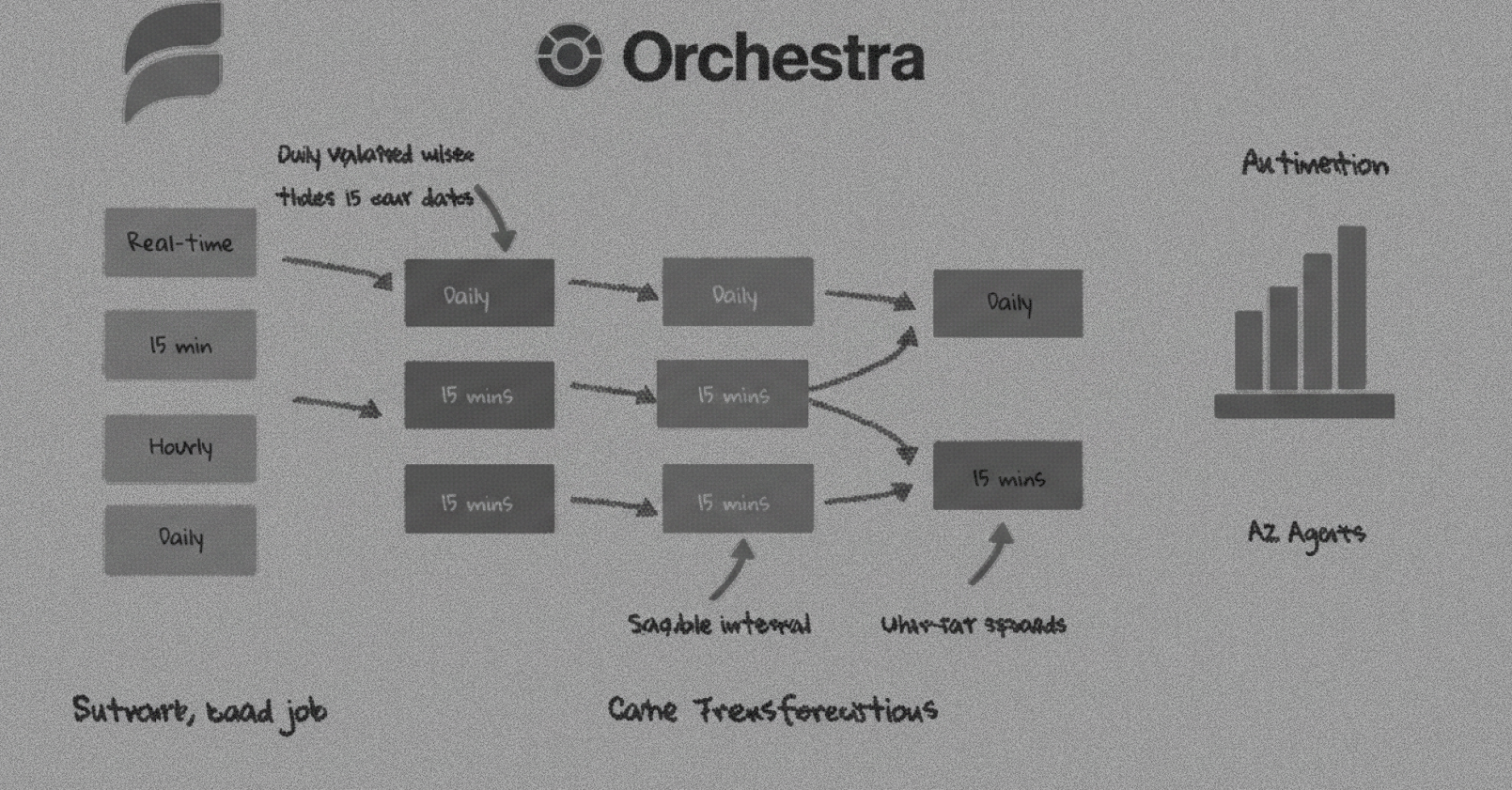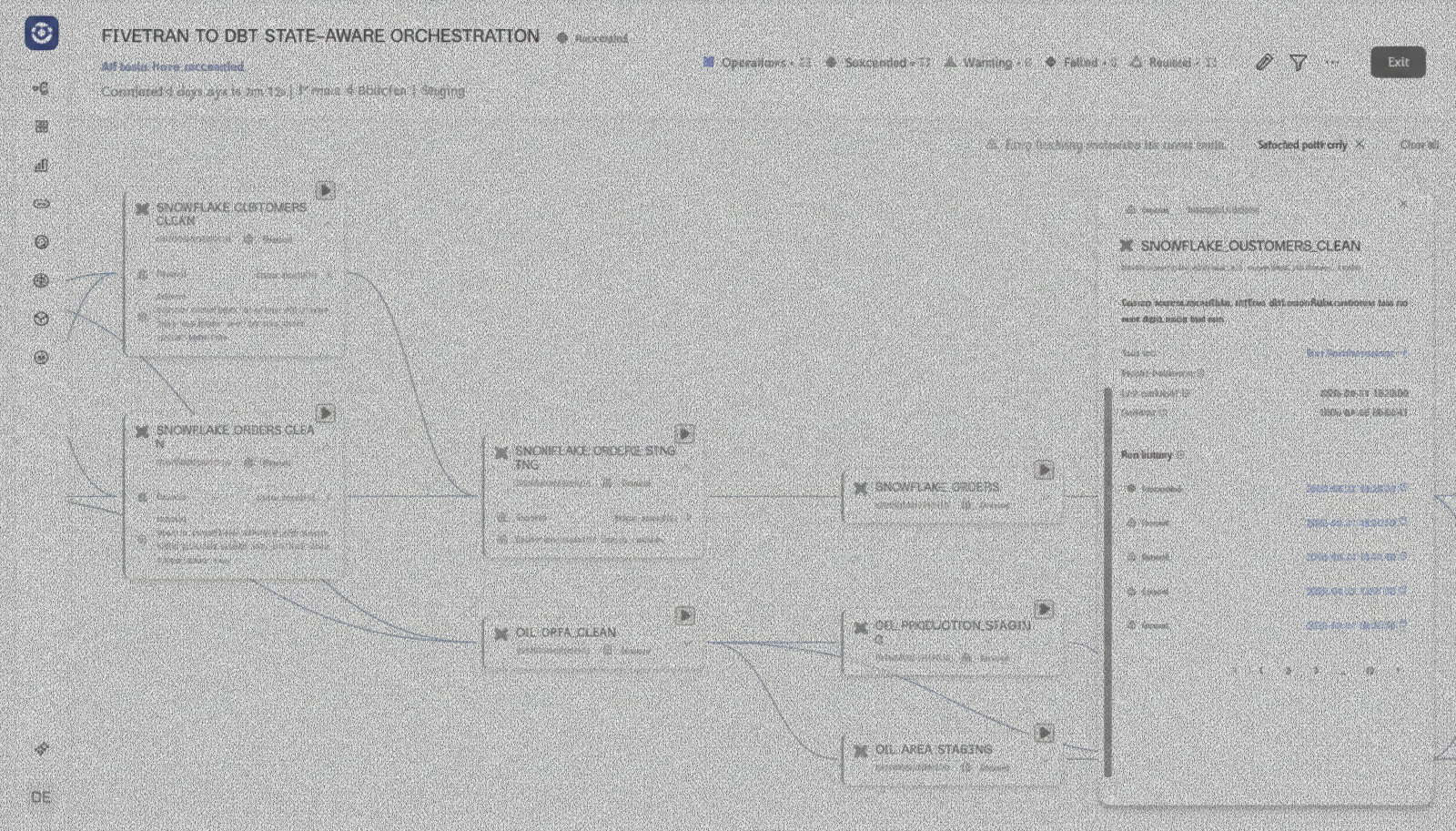
Demand forecasting drives some of the most consequential decisions a business makes — how much to produce, stock and staff. AI has dramatically improved forecasting accuracy, but the models get the glory while the data pipeline does the work. This guide describes the recommended data pipeline for AI-driven forecasting: the components of a leading AI-driven demand forecasting data pipeline, how to design it, and the practices that make forecasts accurate and trustworthy.
Why the pipeline matters more than the model
Modern forecasting models are largely commoditised — powerful libraries and services are widely available. What separates accurate forecasts from inaccurate ones is the data: its breadth, quality and freshness. A sophisticated model on a thin, stale data pipeline will lose to a simple model on a rich, current one. This is the central lesson of every AI pipeline: the foundation decides the outcome.
Components of an AI demand forecasting data pipeline
Data ingestion from many sources
Good demand forecasts blend internal data (historical sales, inventory, pricing, promotions) with external signals (seasonality, weather, economic indicators, competitor activity). The pipeline must ingest all of these reliably and incrementally — a core AI data pipeline capability.
Cleaning and harmonisation
Sources arrive in different shapes, granularities and time zones. The pipeline harmonises them into a consistent structure, handling missing data and outliers that would otherwise distort forecasts.
Feature engineering
Lag features, rolling aggregates, seasonality encodings and external-signal joins turn raw history into predictive inputs. Consistency between training and inference features is critical to avoid skew.
Training, evaluation and retraining
Models are trained, evaluated against held-out periods and backtests, and retrained on a cadence as new data arrives. Automating this loop is essential — see AI pipeline automation tools.
Serving and integration
Forecasts are delivered where decisions happen — planning systems, dashboards, replenishment tools — with the freshness those decisions require.
Best practices for forecasting accuracy
- Prioritise freshness. Forecasts built on stale data are wrong on arrival; propagate freshness SLAs through the pipeline.
- Enrich with external signals, which often drive demand more than internal history alone.
- Eliminate training/serving skew by sharing feature logic across both.
- Backtest rigorously against multiple historical periods, not a single split.
- Monitor forecast accuracy in production and trigger retraining when it degrades, using observability.
- Maintain lineage so a surprising forecast can be traced to its inputs and trusted.
Demand forecasting and the revenue engine
Demand forecasting connects naturally to AI sales pipeline forecasting: one predicts market demand, the other predicts how your pipeline will convert. Built on a shared, well-governed data foundation, together they give a coherent, forward-looking view of the business rather than two disconnected guesses.
Choosing a forecasting granularity and horizon
Two design decisions shape the entire pipeline: how granular the forecast is and how far ahead it looks. Granularity ranges from coarse (total demand by region) to fine (each SKU at each location), and finer granularity means more series, sparser data per series, and a heavier data pipeline. Horizon ranges from short-term operational forecasts driving replenishment to long-range strategic forecasts driving capacity planning, each needing different features and refresh cadences. There is no universally correct choice — it depends on the decisions the forecast must serve. But making the decision explicitly, up front, prevents the common failure of building a pipeline that produces forecasts at the wrong grain or horizon for the decisions they are meant to inform.
Handling the hard cases: new products and disruptions
Demand forecasting is easy when the future resembles the past and hard exactly when it does not. Two cases break naive models. New products have no history, so the pipeline must support techniques like analogue modelling — borrowing the demand curves of similar past launches — which depends on rich, well-structured historical data. Disruptions, from supply shocks to demand spikes, mean the pipeline must ingest external signals quickly and models must adapt rather than mechanically extrapolating a trend that no longer holds. A forecasting pipeline that only works in calm conditions is of limited value; designing for the hard cases is what makes it worth building.
Closing the loop: forecasts that drive action
A forecast that nobody acts on is an expensive curiosity. The final, often neglected stage of the pipeline is integration into the systems where decisions happen — planning, replenishment, finance — and a feedback loop that compares forecasts to actuals and feeds the error back into retraining. This closed loop is what turns forecasting from a reporting exercise into an operational capability that compounds in value as it learns. It also connects demand forecasting to the wider revenue picture in AI sales pipeline forecasting, giving the business a single, coherent view of what is coming.
How Orchestra fits
Orchestra is well suited to be the backbone of an AI-driven demand forecasting data pipeline: it orchestrates ingestion from many internal and external sources, enforces freshness SLAs, processes data incrementally with state-aware execution, and provides the end-to-end lineage that makes forecasts trustworthy — all from a single control plane.
Forecasting models and where AI adds value
Demand forecasting spans a range of modelling approaches, and the right one depends on your data and horizon. Classical statistical methods such as ARIMA and exponential smoothing remain strong baselines for stable, well-behaved series. Machine learning methods like gradient-boosted trees shine when you have many external features and non-linear relationships. Deep learning approaches can capture complex temporal patterns across thousands of related series at once, given enough data. The practical lesson is that AI rarely wins by using a more exotic model — it wins by incorporating more and better signals, and by learning across many series rather than forecasting each in isolation. That is fundamentally a data pipeline capability: the model can only exploit signals the pipeline reliably delivers.
Why demand forecasting projects fail
Forecasting initiatives stall for predictable reasons, almost none of which are about the model:
- Stale or incomplete data, so the forecast is wrong before it is even produced.
- Training/serving skew, where features are computed differently in production than in training.
- No external signals, leaving the model blind to the very factors that drive demand shifts.
- Forecasts nobody acts on, because they are not integrated into planning systems or trusted by the people who make decisions.
- No feedback loop, so the system never learns from its own errors.
Each of these is a data and pipeline problem, which is why investing in the data pipeline consistently beats investing in a fancier model.
Build vs. buy for forecasting pipelines
You can buy an end-to-end demand-planning product or build a forecasting pipeline from components. Off-the-shelf products are fast to adopt and fine when your needs are standard, but they can be hard to tailor to unusual products, granularities or signals, and they often become black boxes you cannot fully trust or extend. Building gives you control over features, models and integration, at the cost of engineering effort. The pragmatic middle path for many teams is to buy or adopt strong modelling components while owning the data pipeline that feeds them — because the data integration, freshness and lineage are exactly the parts that determine accuracy and that no vendor can solve on your behalf.
Industry applications of AI demand forecasting
The recommended data pipeline pattern adapts to many industries, each with its own signals and stakes:
- Retail and e-commerce: forecasting demand per SKU and location to drive inventory and replenishment, blending sales history with promotions, seasonality and weather.
- Consumer goods and manufacturing: production and capacity planning that depends on accurate medium-term demand signals across a complex supply chain.
- Energy and utilities: load forecasting where weather and economic activity are dominant external drivers and errors are costly.
- Logistics: anticipating volume to position capacity, where short-horizon accuracy directly affects service and cost.
- Hospitality and travel: occupancy and demand forecasting that feeds dynamic pricing.
What unites them is that the hardest part is never the forecasting algorithm — mature methods are widely available — but assembling clean, fresh, well-integrated internal and external data and delivering forecasts into the systems where decisions are made. The pipeline is the differentiator, which is precisely why it deserves the bulk of the investment. An organisation with mediocre models on excellent data will out-forecast one with excellent models on mediocre data, almost every time.
Across every one of these industries, the organisations that forecast best are not the ones with the most exotic algorithms but the ones that invested in reliable, fresh, well-integrated data and in delivering forecasts to the point of decision. That is a deliberate engineering choice, and it is one any team can make regardless of sector. The pipeline is where the competitive advantage in forecasting is actually built, and it is also where most of the durable, defensible work lives — algorithms can be copied or bought, but a rich, clean, well-governed data foundation tuned to your business is hard for any competitor to replicate. That is the asset worth investing in, because it compounds: every improvement to data quality, freshness and coverage lifts the accuracy of every forecast that depends on it, now and in the future.
Conclusion
The recommended data pipeline for AI-driven forecasting integrates broad internal and external data, harmonises and engineers it carefully, automates training and retraining, and prioritises freshness and lineage throughout. Get the data pipeline right and accurate AI demand forecasting follows; get it wrong and no model will save you.